Research to Real World
Making University Research Easier to Find and Use
- Timeline
- 4 Months
- Platform
- WordPress + Kadence + WooCommerce
The Brief
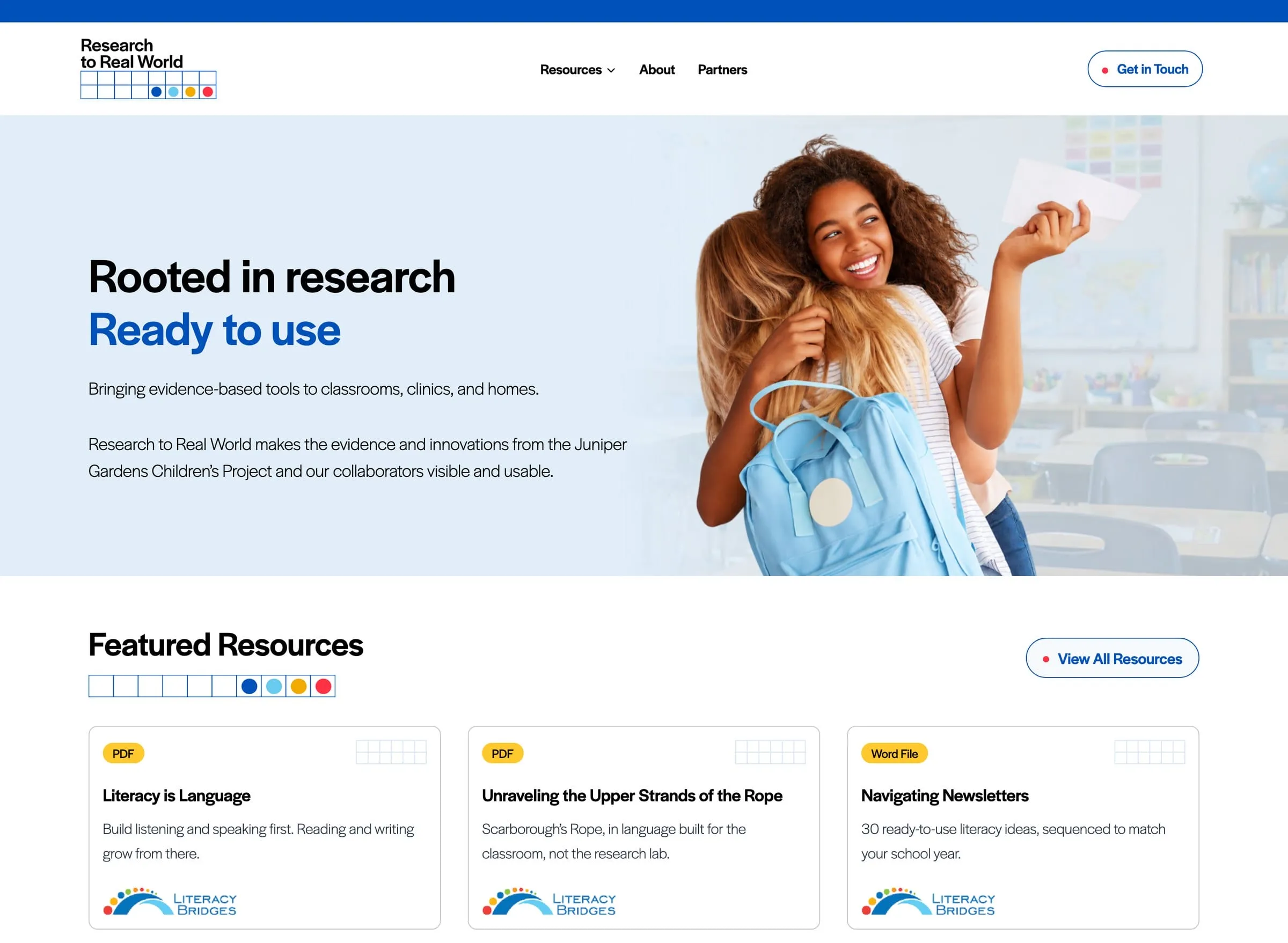
Juniper Gardens develops and studies classroom programs such as CW-FIT, I-Connect and IGDIs for teachers and schools around the world. A research paper, a classroom tool and a resource a teacher can find through search are three different things. We helped turn that research into a site teachers and practitioners could find, understand and use. Practitioners rarely begin with a program name. They start with the problem in front of them: classroom behavior, student engagement, early literacy, or another immediate need. The site needed to help them start there.
How We Did It
How We Built It
Six Stakeholder Interviews
Juniper Gardens researchers walked us through the evidence behind each program. Our task was to identify which findings and tools could become useful, standalone resources for practitioners.
Organized Around Real Needs
We mapped the content structure before anyone designed a page. Topic pages bring related research and resources together. Resource pages explain what each tool is for, who it helps and how to use it.
Brand Translated for the Web
Blake developed the wireframes and visual design from the client's existing identity. The ten-frame motif from the logo appears in section headings and page dividers, tying the web design back to the existing brand.
Built on Kadence
We built the site in WordPress and WooCommerce, then turned the design into reusable Kadence block patterns. The team can add new pages and resources without rebuilding layouts or calling a developer for every update.
Planned Around KU Payments
KU's payment system does not currently support native WooCommerce checkout, so visitors complete purchases through KU uStore. The catalog and product data are already structured for WooCommerce, so nothing needs rebuilding if that changes.
The Finished System
How the Site Works
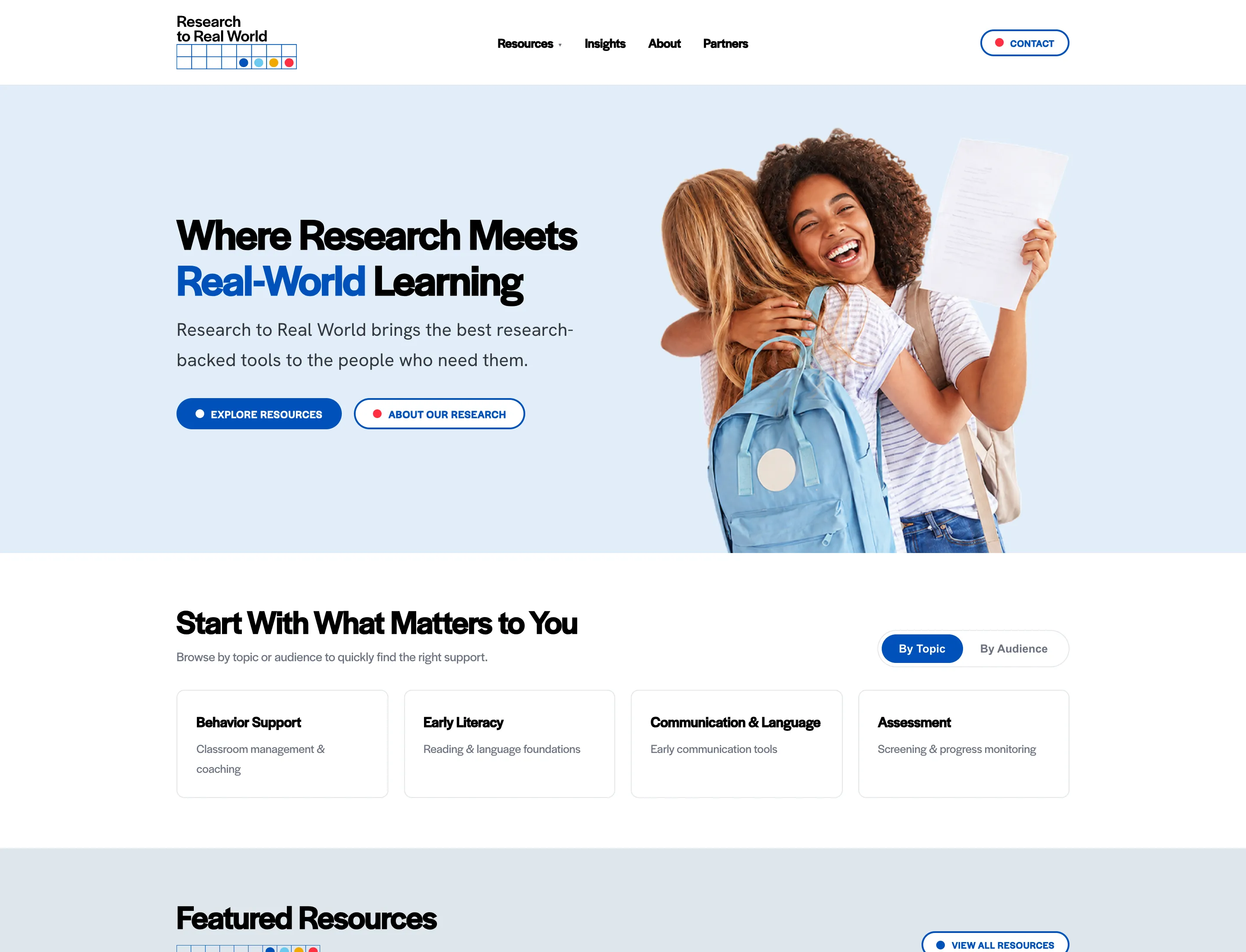
A resource page works best when a visitor already knows what they need. Many practitioners are one step earlier: they are searching for help with a problem in their classroom. The catalog is organized around the topics practitioners search for, not only the names of the programs behind them. That gives teachers a useful starting point even when they have never heard of CW-FIT or IGDIs.
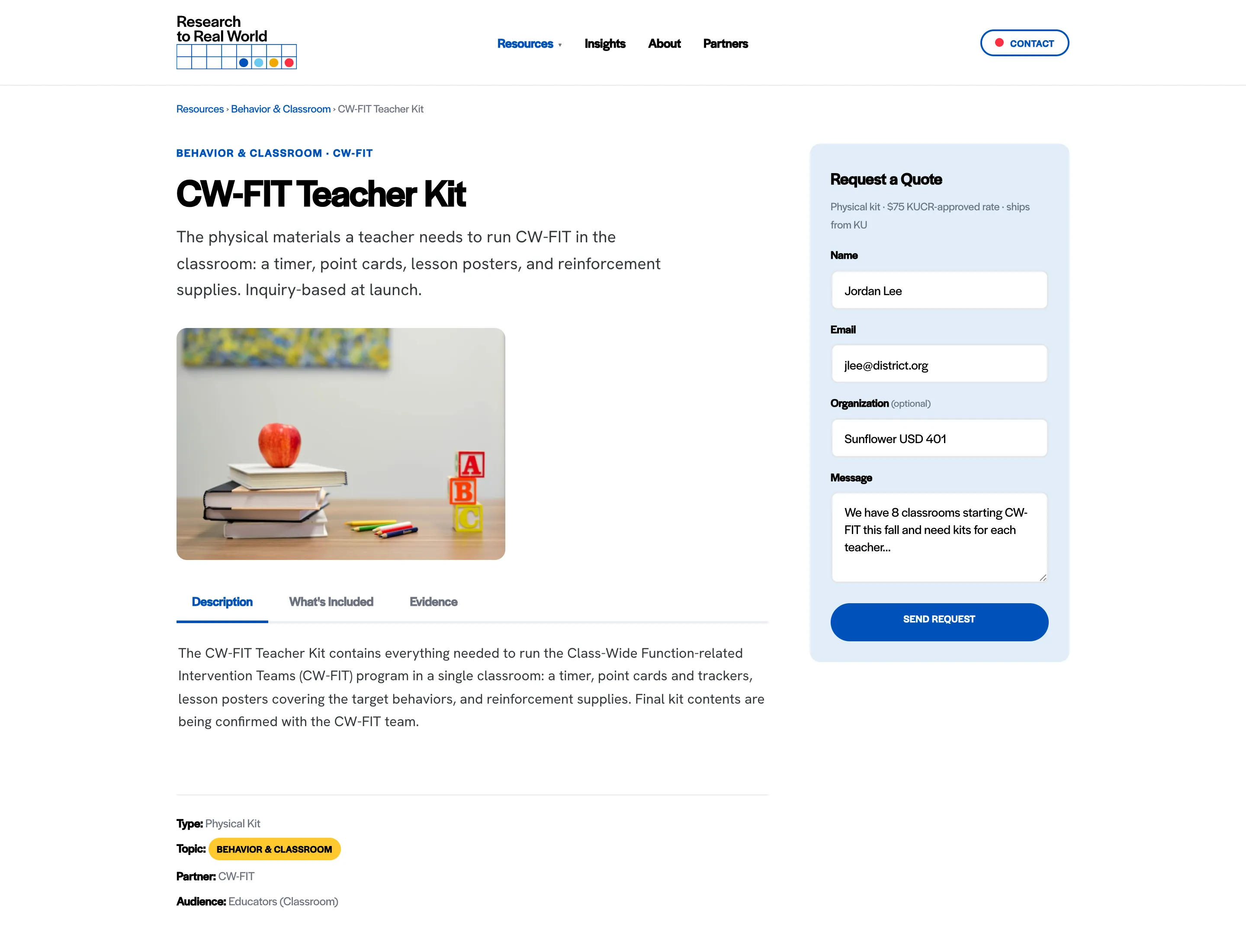
Resources Are Structured Content
Insights Help People Find Resources
The Team Turns Research Into Resources
Visual Evidence
Visual Evidence
Homepage: Start With the Classroom Need
Resource Page: From Evidence to a Usable Teacher Kit
Brand System: Existing Identity Adapted for the Web
At Launch
What Launched
A Public Resource Catalog, Built in Four Months
Research to Real World launched publicly on July 1, 2026. The project ran from March through June and began with six stakeholder interviews.
A Clearer Path From Research to Practice
Resources provide practical tools. Insights explain the research and the classroom challenges those tools address. Topic pages connect related resources and insights.
A Catalog the Team Can Keep Growing
The team can add resources, partners and supporting content through structured fields and reusable block patterns, without rebuilding each entry from scratch. The same approach works wherever an organization needs to organize a growing set of services, programs, products, locations or resources without making every addition a custom development project.
Project Details
Services
- Brand identity and web design
- Website design and development
- Stakeholder interviews
- Information architecture
- Content strategy
- Structured content modeling
- Editorial workflow and AI-assisted drafting training
- Search engine optimization
Platform and Tools
- WordPress
- WooCommerce
- Kadence Theme
- Kadence Blocks
- Advanced Custom Fields
- Formidable Forms
- Cloudflare Turnstile
- Rank Math
Expertise Nobody Can Find?
If your organization knows things worth sharing and the website is not helping the right people find them, we can talk about what it takes to close that gap.