Case study · Software
Perdura
A Shared Family Archive Relatives Can Add To and Keep
- Status
- Public beta
- Platform
- Astro, Payload CMS, TypeScript and PostgreSQL
- Live site
- perdura.org
What Perdura Needed
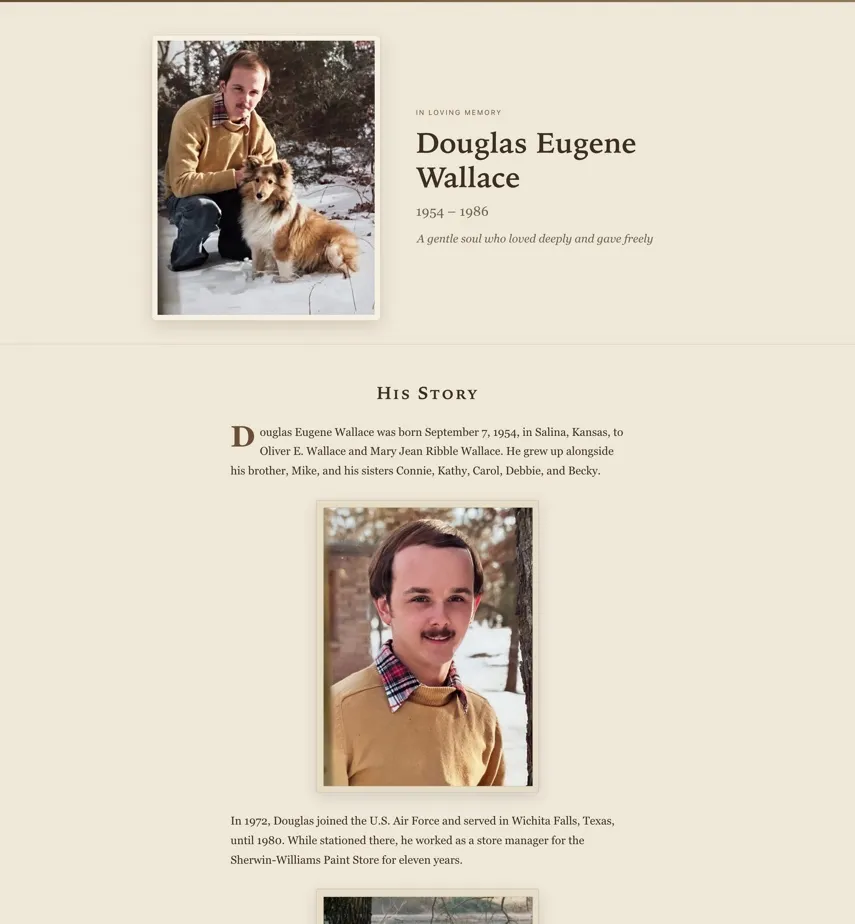
A traditional obituary captures a few facts about a person. It rarely has room for the stories, photographs, friendships, work and habits that make a life recognizable to the people who knew it.
Perdura began with a practical question. How can a family create an archive that relatives can add to, that someone in the family reviews, and that the family can keep if the hosted service changes? Many memorial services offer a short tribute or a printed book, and online access depends on the company keeping the material.
We defined the product, designed the experience, built the application, and continue to run and improve it.
What We Built
-
Designed From the Start for Families to Keep a Copy
Published archives are static pages, and we modeled the content and media so a family can keep its own copy. Today the export produces a content bundle and a printable book. The complete export of written content and original media is still in development.
-
A Private Way for Relatives to Contribute
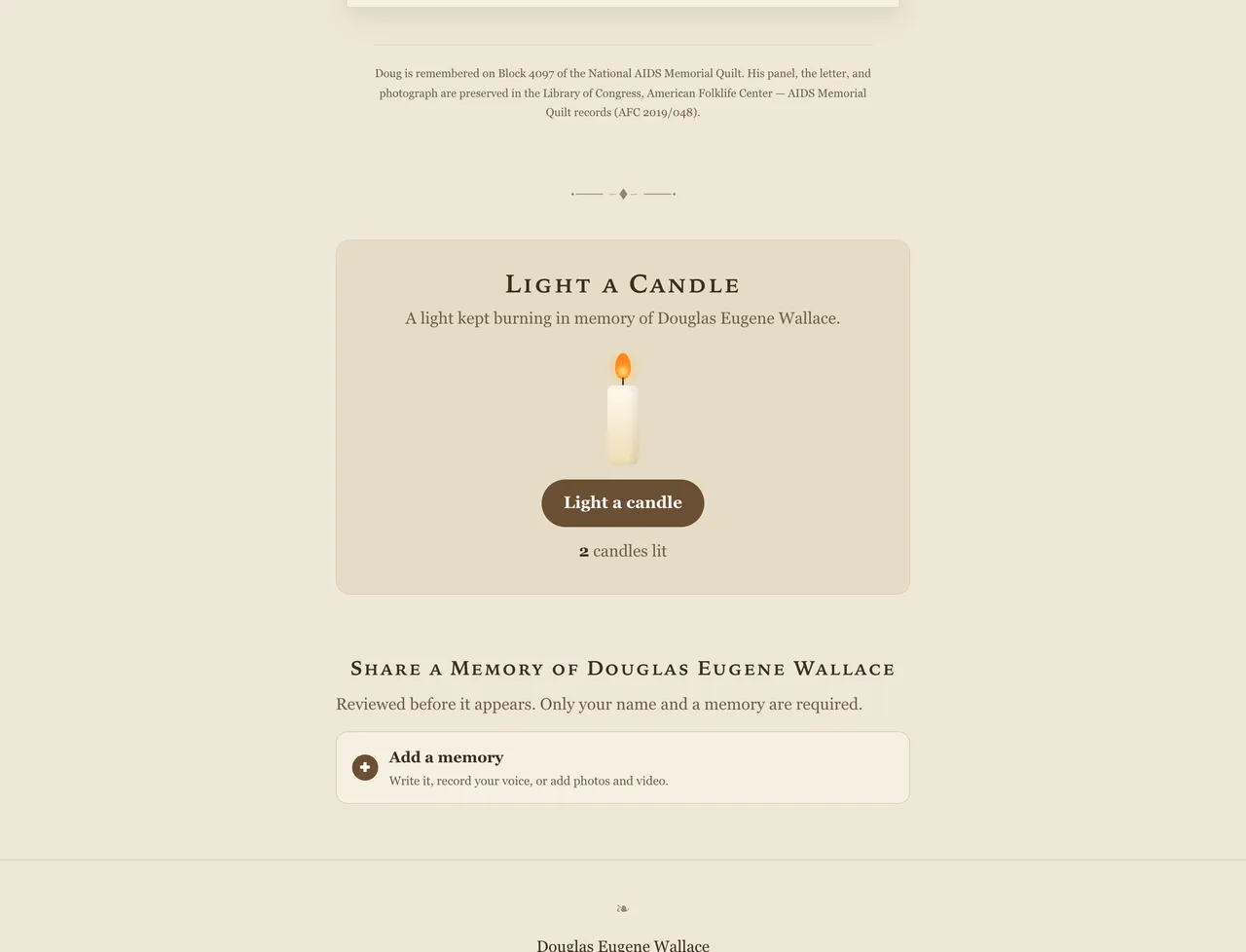
Family members receive a private link where they can write a memory, record their voice, or add photographs and video from a phone. Nothing is published until an owner or editor in the family reviews it, and contributors do not create an account before they take part.
-
A Publishing System Designed for Many Families
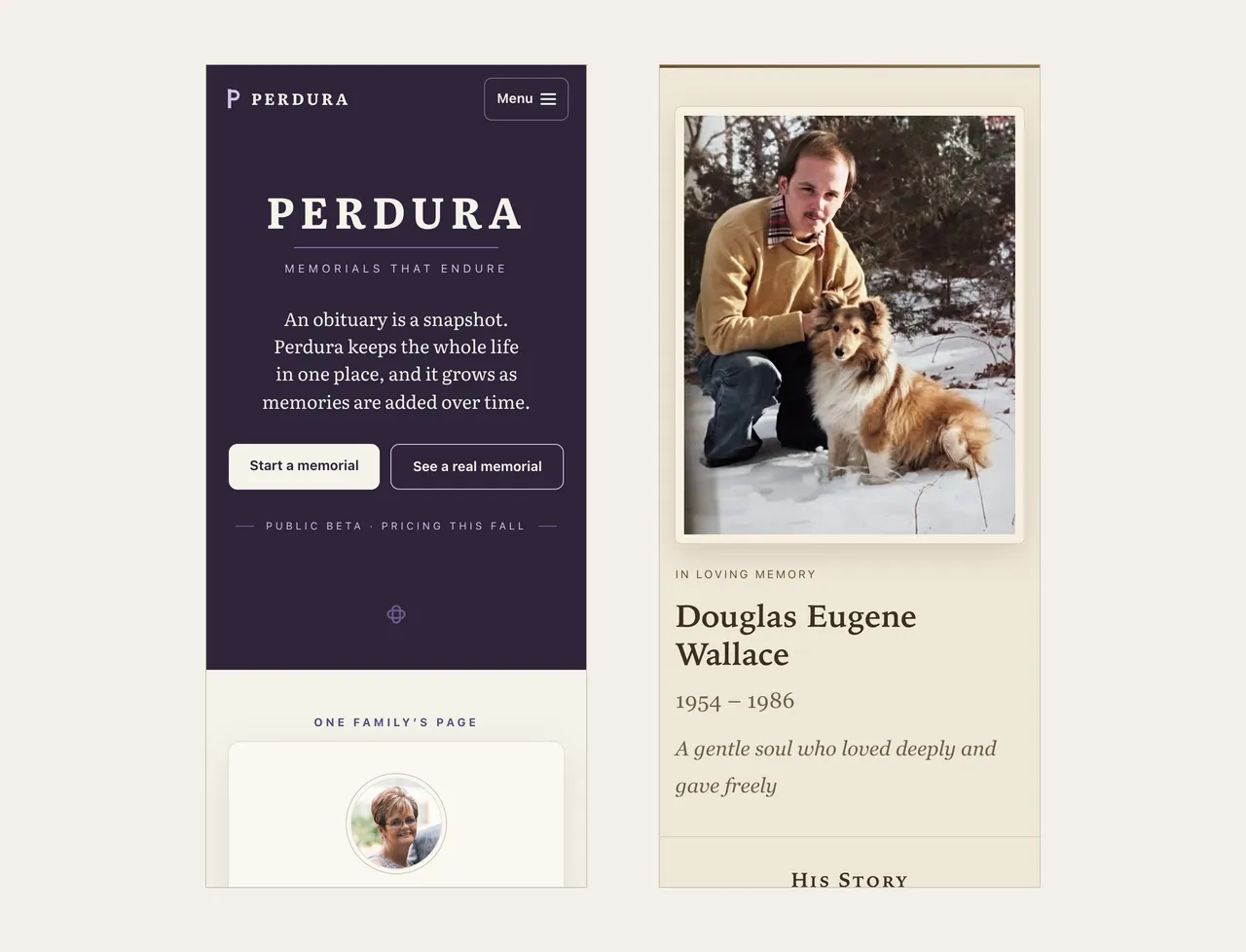
Each archive publishes to its own address while using shared content models and a themed design system. Every new archive follows the same publishing process, with no custom build for each family.
-
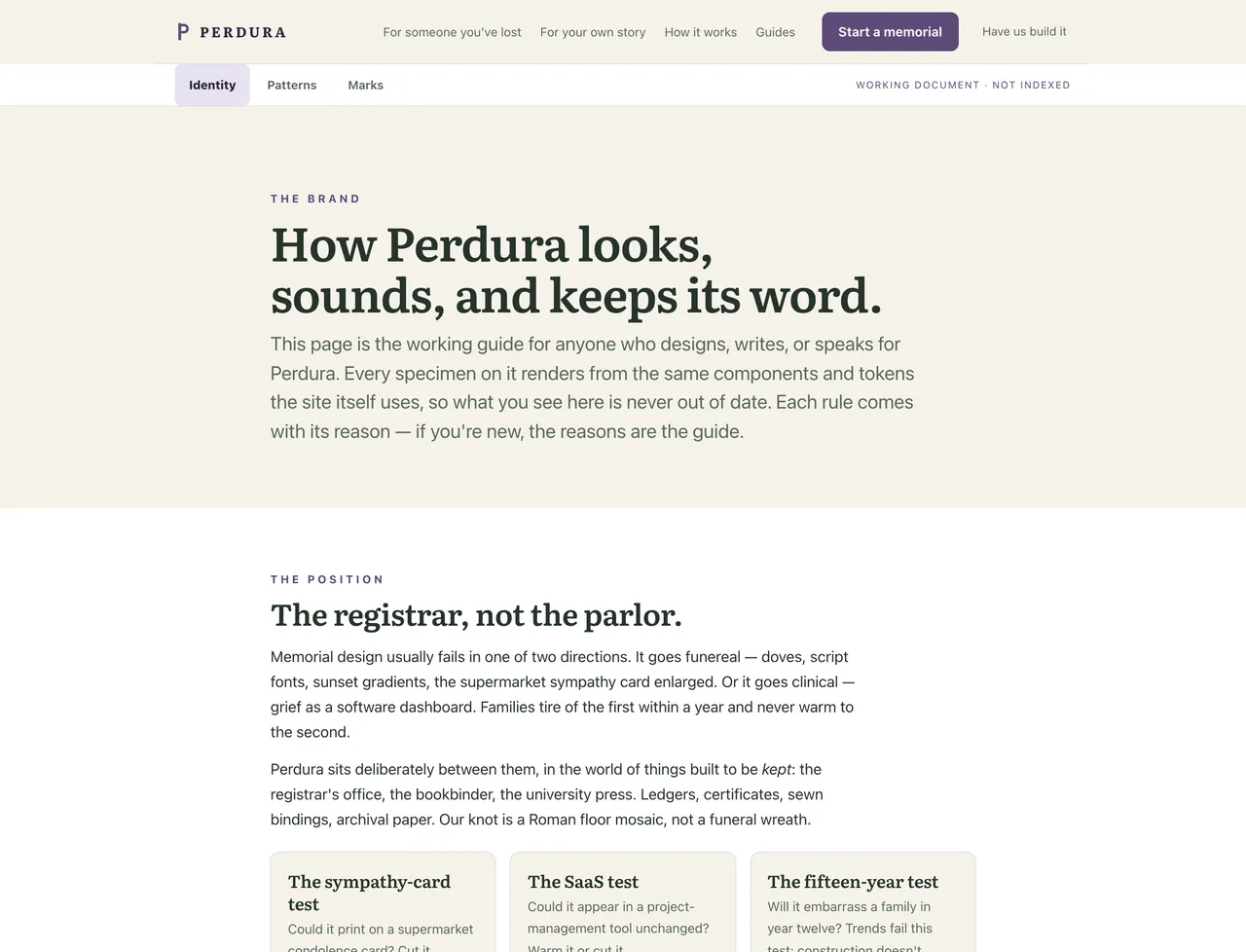
A Design System Made for Careful Reading
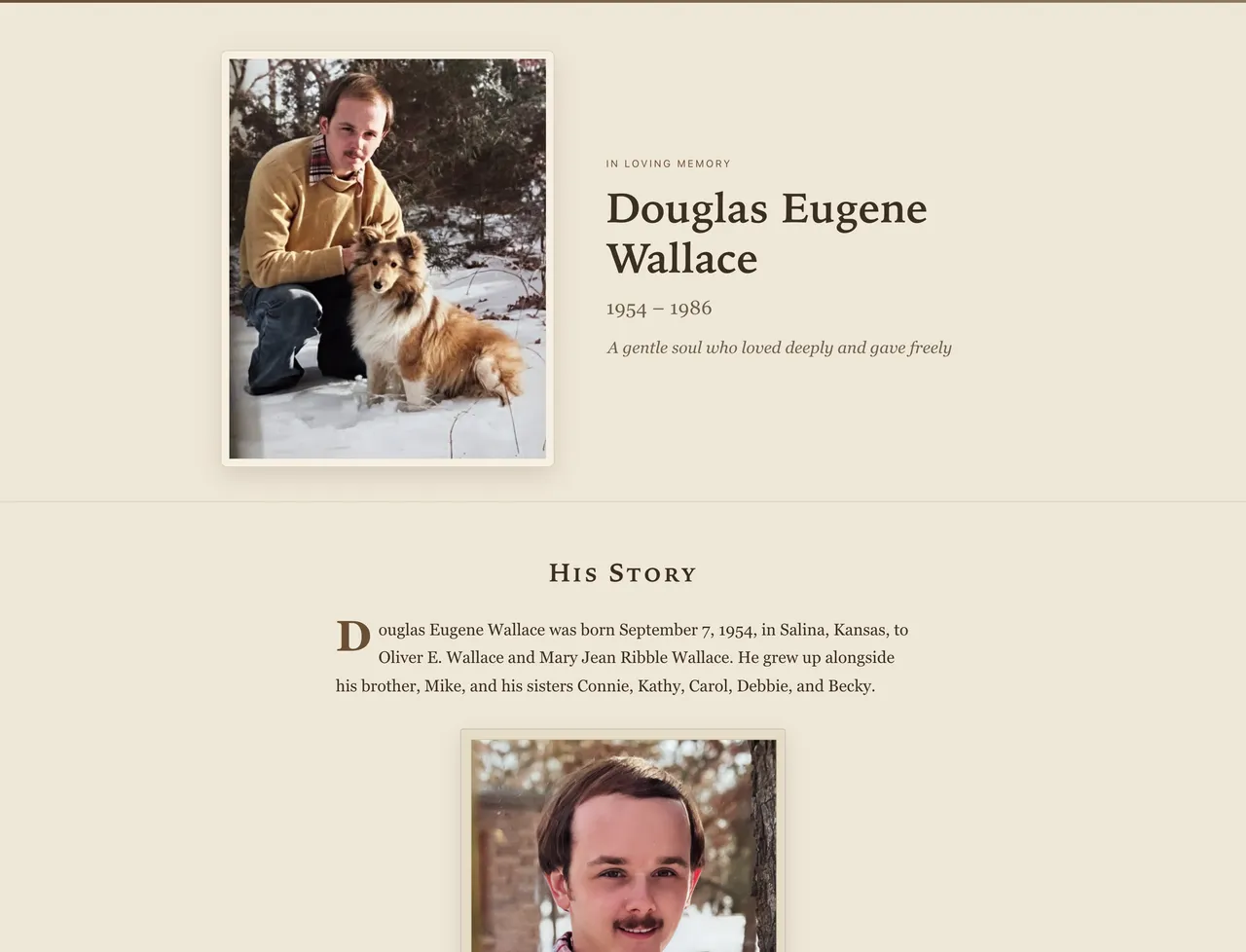
We set type, color, spacing and content patterns for pages people read closely, share with relatives and come back to. Each archive needed to feel personal and calm and still match the others.
From Contribution to Published Archive
Besides the public page, a family archive needs a private way to add material, a clear review step, a repeatable publishing process and a copy kept outside the platform. Perdura handles each one separately, so none of them adds work for the family.
-
Structured Content
Stories, moments, people, photographs and messages are stored as separate, related content types. That gives the archive room to grow while keeping new material consistent and easy to place. -
Private Contribution and Review
Contributors use private links to add memories and media. An owner or editor decides what appears publicly. Contributing stays simple, and the family controls what is published. -
Static Publishing
Approved content publishes as a static Astro site. Public pages are served as prebuilt files, with no application code running for each reader. That keeps the public archive light and simpler to run. -
Family Export
The export gives a family a bundle it can keep and use away from the hosted service. Today that is a content bundle and a printable book, with the full written and media export in development. We designed the data and publishing around that export from the start.
What Families and Editors Can Do
-
Families Can Keep Their Own Copy
The export produces a content bundle and a printable book today, with the full written and media export in development, so access does not depend on the hosted service alone.
-
Relatives Can Contribute Without Giving Up Editorial Control
Private links make it easy to add material. An owner or editor decides what becomes part of the published archive.
-
A Personal Archive Can Still Be Practical to Run
Shared content models and documented design rules let new archives follow a consistent publishing process instead of requiring a new build each time.
Contribution, Timeline and Mobile Views
Contributing Without an Account
A Life in Moments
Built for the Phone It Will Be Read On
One Visual System Across Every Archive
Need a Product, Portal or Publishing System Built Around Your Process?
We design and build custom applications for work that does not fit a template, including structured content, user roles, approval steps, private workflows, publishing systems and data exports. Perdura is one product we defined, built and continue to run.