Case study · Publishing
Resist Now
A Content-Heavy Astro Site Built on One Set of Sourced Facts
- Status
- Independent project, live
- Platform
- Astro, TypeScript and Cloudflare Pages
- Captured
- November 16, 2026
- Live site
- resistnow.net
What Resist Now Needed
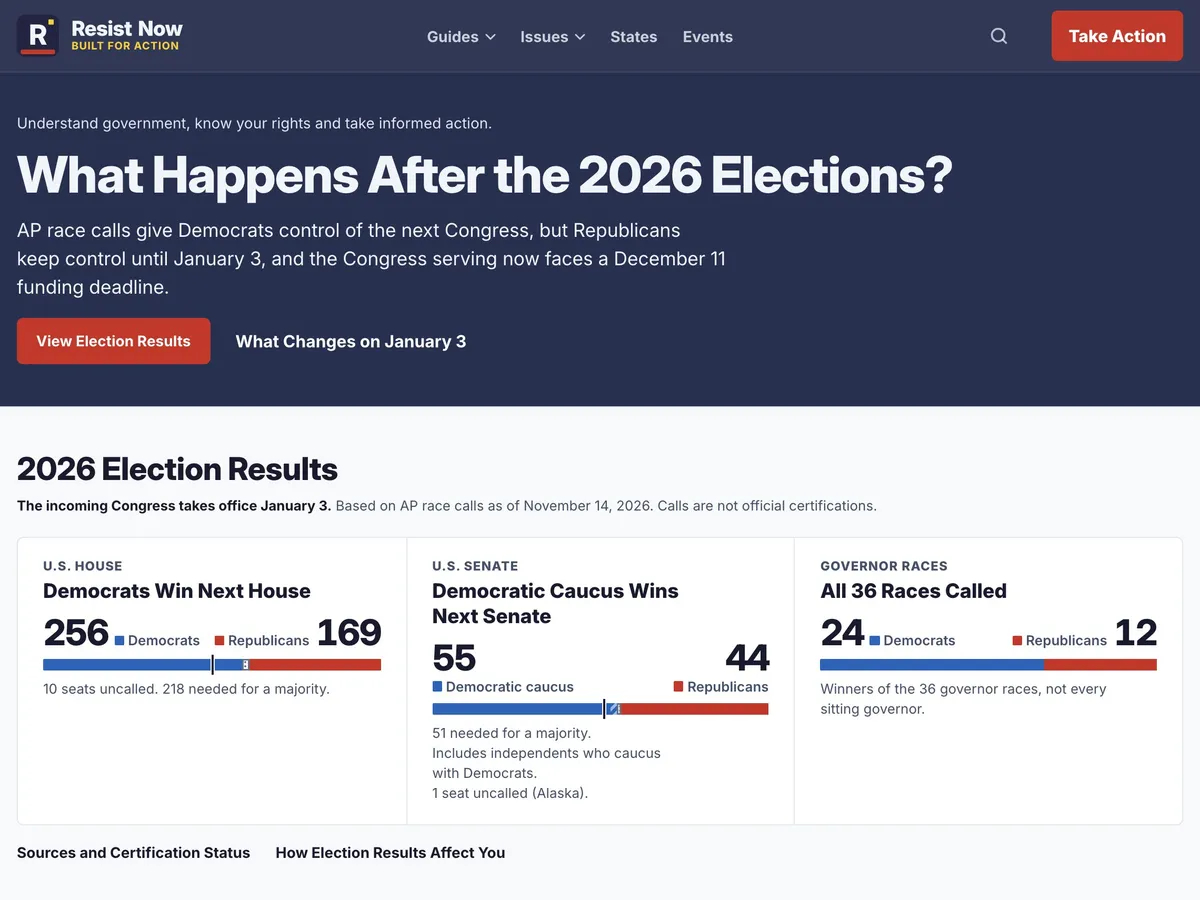
A civic reference site repeats the same facts in many places. One state's minimum wage appears on the national explainer, that state's page, a map and a comparison table. When each page has its own typed copy, the figures drift apart as laws change. Nobody notices until a reader does.
The site also needed 50 state pages, plus issue pages and action pages, all sharing one design. Each new page is assembled from components the site already has.
What We Built
-
Structured Content With Sourced Data Files
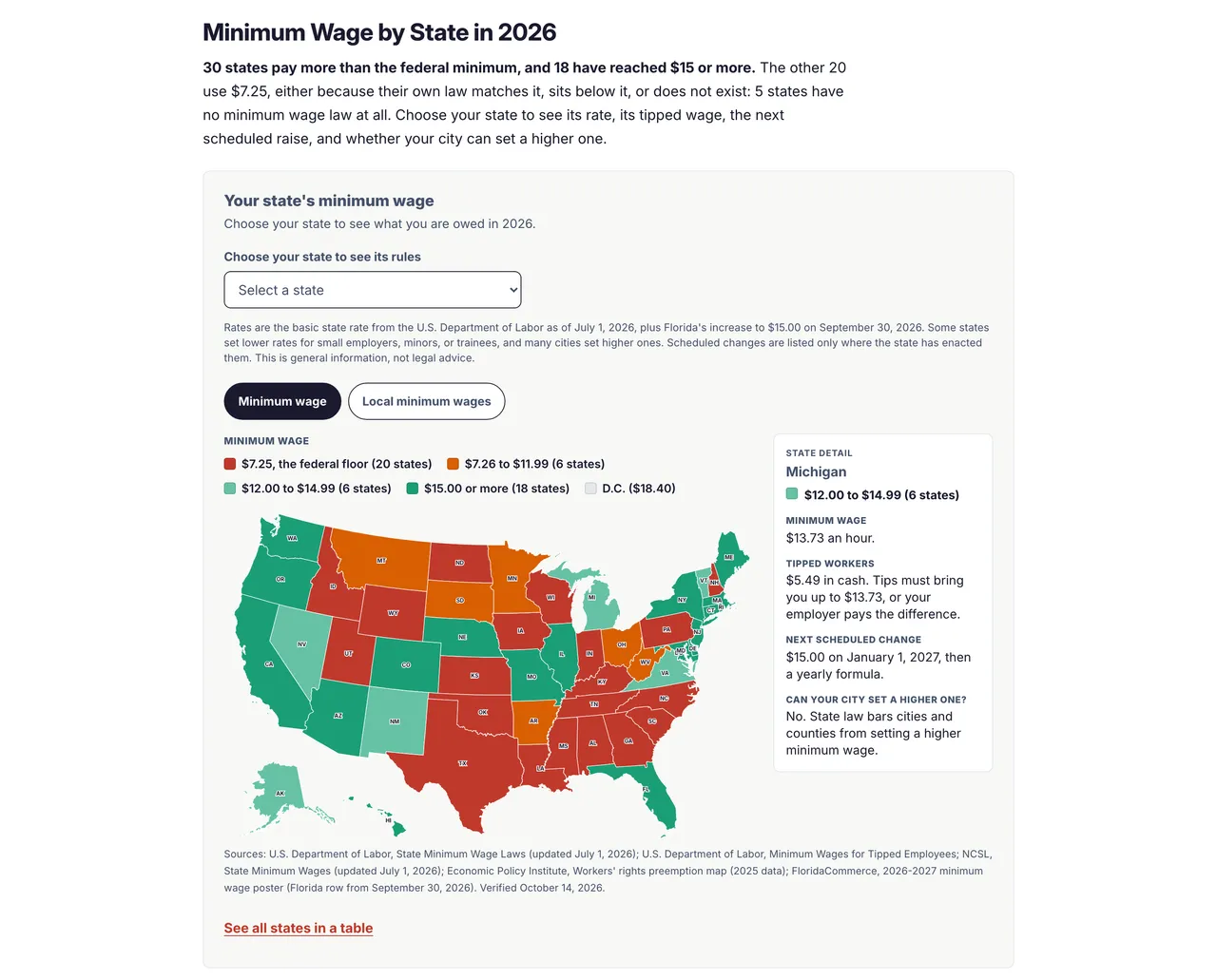
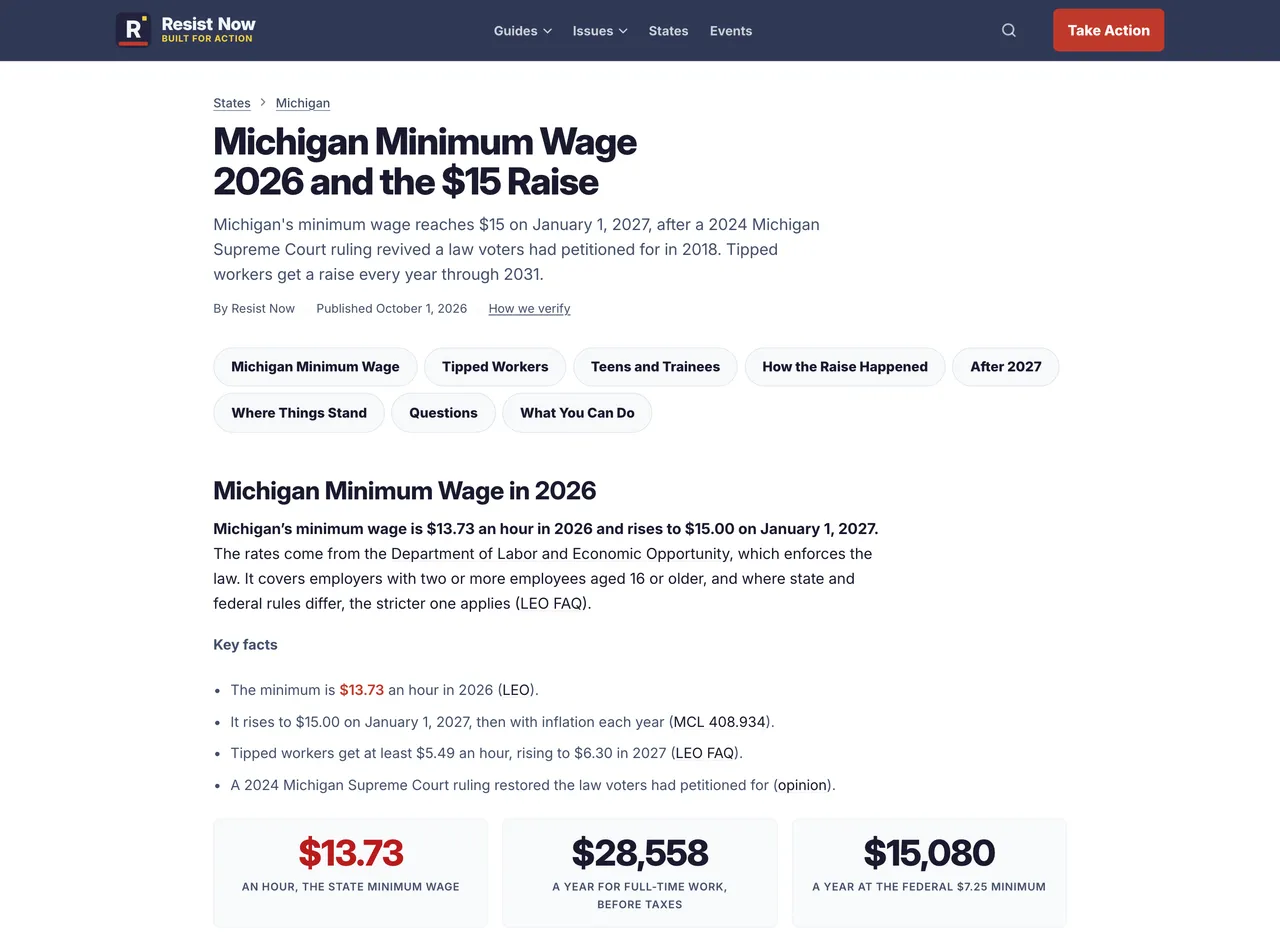
Each subject has one data file with its figures, the sources behind them and the date they were last checked. That file is the single source of truth for the subject. Pages import a figure instead of retyping it. When a state raises its minimum wage, one change updates the explainer, the state page, the map and the comparison finder.
-
Interactive Charts and Maps With Source Tables
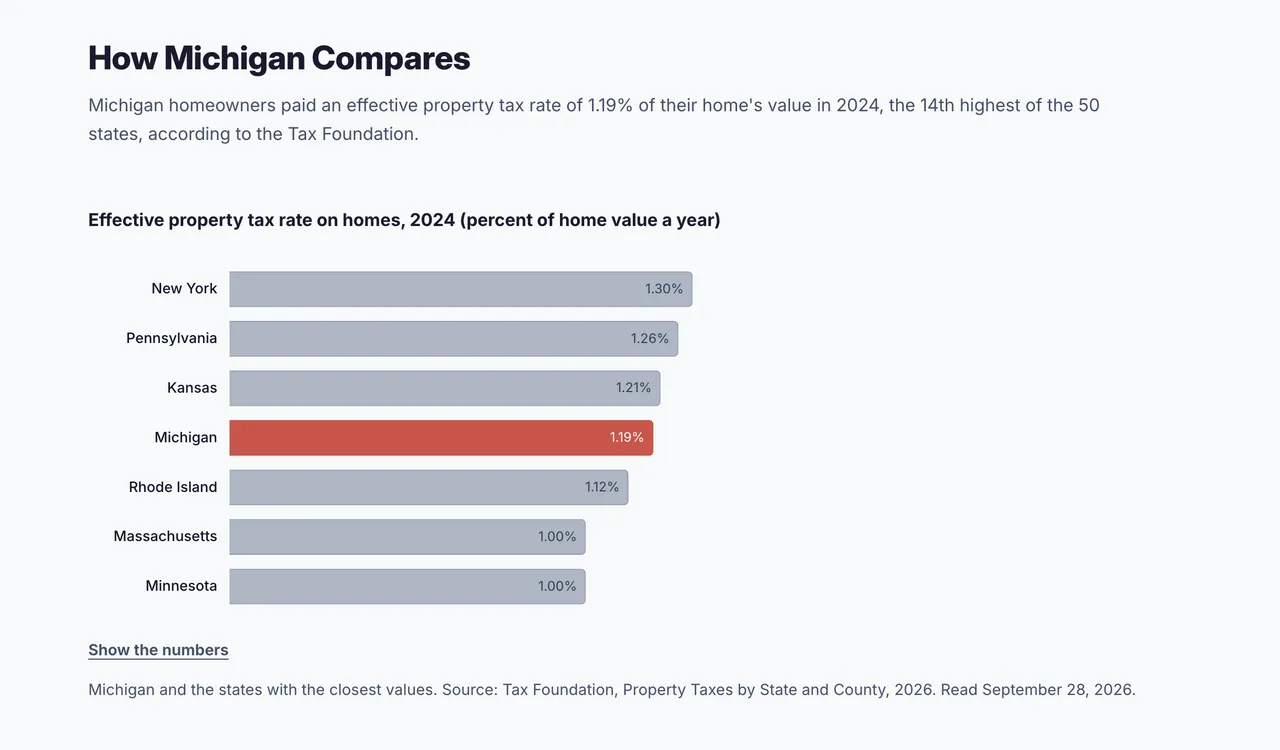
A chart is a short record that names its data, the component that draws it and the options a page can change. The same chart appears on national, state and issue pages without being rebuilt. Bar charts, doughnut charts, seat counts, maps and timelines all follow these rules. Each chart has a Show the numbers table under it. A chart with no source or as-of date stops the build.
-
Reusable Components and State Page Templates
More than 100 components cover state pickers, timelines, stat rows, comparison tables, maps, and letter and call-script blocks. All 50 state pages come from one template, filled in from each state's data. Another 93 topic pages go deeper where a state's laws call for it. New pages match the rest of the site without one-off layouts.
-
Checks Before Anything Publishes
Each build checks internal links, page widths for each page type, the required parts of every letter and action, and chart sources. A page that fails a check does not publish.
-
Scheduled Checks and Content Operations
The site runs a full build check every night. It also refreshes its events listing every week. Each month it checks that every prepared letter still fits its issue, and that the state news feeds still work. Pages scheduled for a date, such as the day a new governor takes office, update on that date. Breaking-news labels come off on their own after 36 hours. We use AI tools to help run these checks and audits. A person reviews the findings and decides what changes.
-
Dated Corrections and Updates
Notes at the end of a page separate corrections from updates, each with its date. A reader can tell a fixed mistake from a change in the law.
Tools for Readers
The same components give readers a few ways to act on what they read.
-
State Picker
The site remembers a reader's state and takes them to it on the next visit. -
Copy a Letter or Script
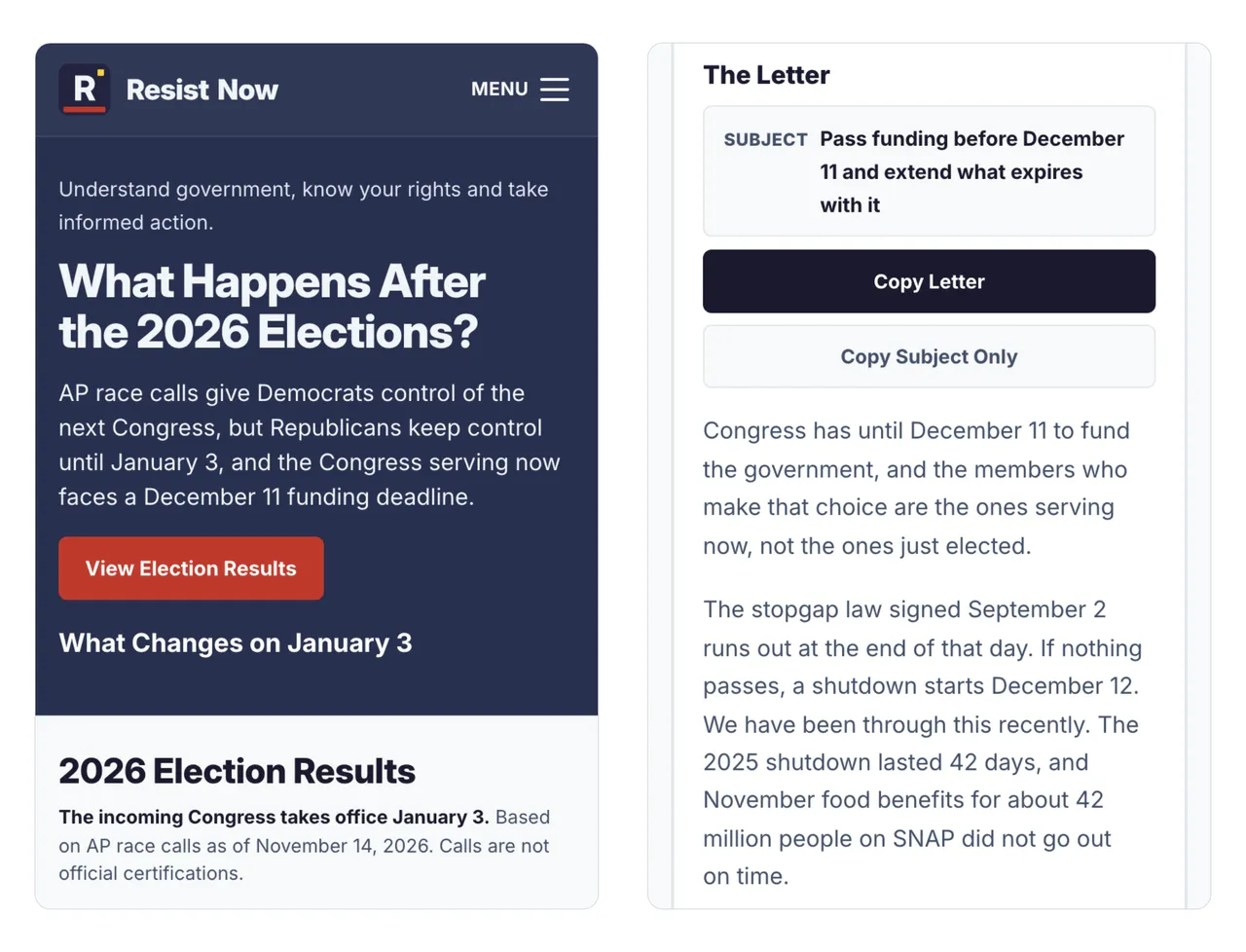
Prepared letters and call scripts copy with one tap. If the copy fails, the page says so plainly. -
Measuring Reader Actions
Google Analytics 4 (GA4) records searches, state selections, action clicks and copies. A copied letter counts as interest, because the site can't see whether it was sent. -
Hosting and the Contact Form
The site is built as static pages hosted on Cloudflare Pages. The contact form runs as a Cloudflare Pages Function. It checks for spam with Turnstile before the message is emailed.
What This Approach Gives a Site Owner
-
A Fact Changes in One Place
The same setup works for any fact that repeats, such as fees, insurance lists, product specifications, hours and service areas.
-
Pages Stay Consistent as the Site Grows
New pages use the same components and data, so they match the rest of the site. They still match after the site grows past what a team could check by hand.
-
Mistakes Are Caught Before Launch
Broken links and missing sources stop the build before they reach a reader.
One Figure, Many Pages
The National Finder
The Same Figure on Michigan's Page
A Comparison Chart on Every State Page
Built for a Phone
Does Your Site Repeat the Same Facts on Many Pages?
Fees, locations, product specifications and policies often appear on dozens of pages. We can set them up so each fact is entered once and updated everywhere it appears.